Sustainable feedstocks. Responsible sourcing. Long-term impact.
Traceable, partnership-led supply chains in Pongamia and Used Cooking Oil,
connecting Indian land, kitchens and communities to the world's renewable
fuel industry.
Ranjit Oil Mills India Pvt. Ltd. is building reliable feedstock solutions for the renewable energy and Sustainable Aviation Fuel (SAF) industry. We work across the value chain, from Pongamia cultivation and seed aggregation to oil processing and Used Cooking Oil (UCO) sourcing, with a focus on quality, traceability and responsible supply.
Turning Natural Resources into New Possibilities. We see significant potential in native oilseeds and waste-based feedstocks to support the transition towards lower-carbon fuels. Our focus is on developing scalable supply chains that connect farmers, local communities, aggregators, processors and renewable fuel producers.
Led today by Aashay Shah, Aayush Shah and Hasitkumar Trivedi, Ranjit Oil Mills combines its family legacy with a forward-looking approach to sustainable feedstock development, traceability, responsible sourcing and long-term partnerships.
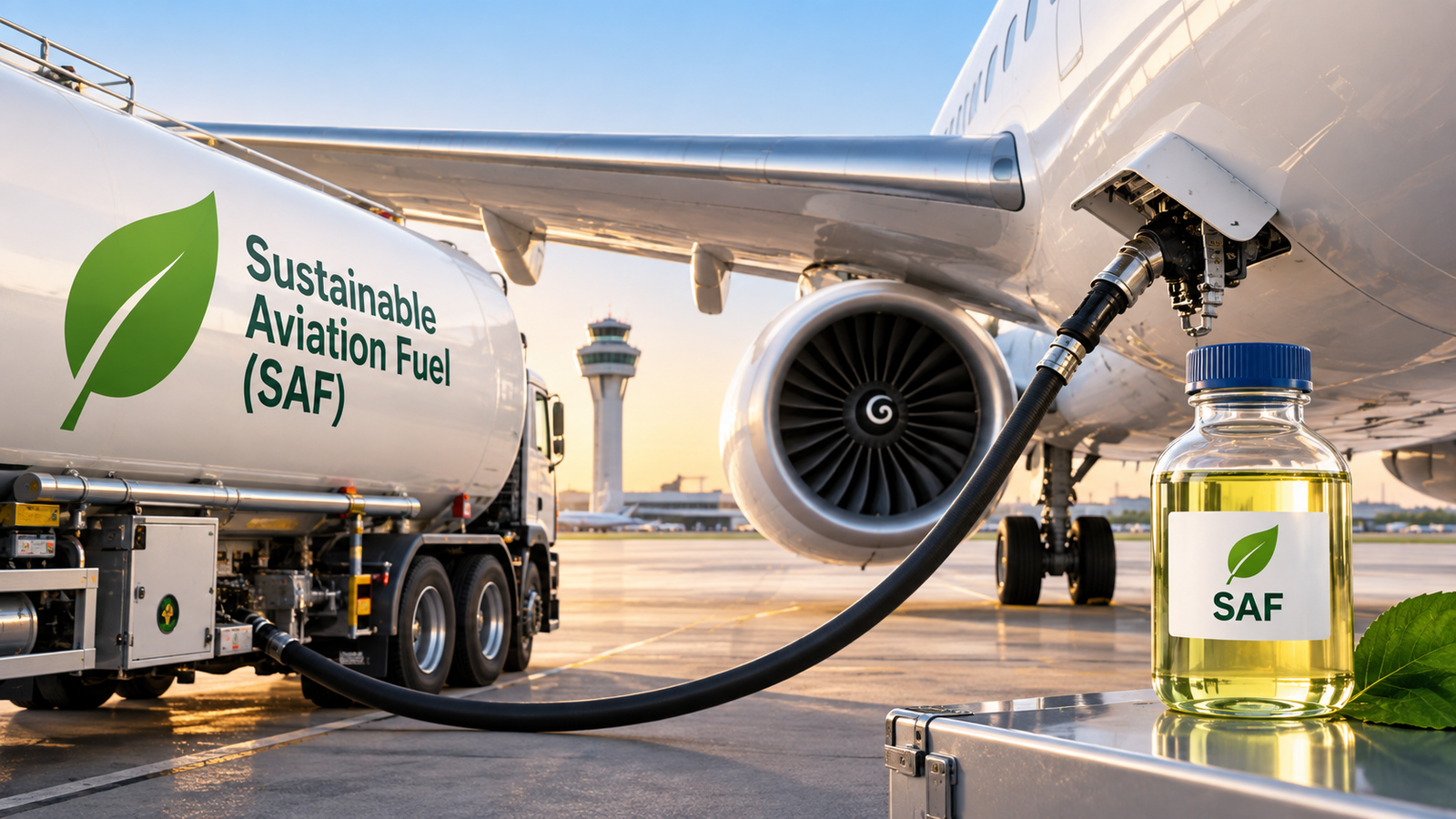
Ranjit Oil Mills India is into building a trusted feedstock partner for the growing Sustainable Aviation Fuel (SAF) industry, while creating meaningful socio-economic opportunities for farmers, suppliers, workers and local communities, ensuring that the transition to a low-carbon future creates value not only for the industry, but also for the people at the heart of the supply chain.
Developing feedstock pathways that can support India's growing
role in the global renewable fuels ecosystem.
Our legacy
From Karanja oil to a sustainable future
In 1974, Late Shri Ranjitbhai Shah founded Ranjit Oil Mills, beginning our journey
with the manufacturing of Karanja (Pongamia) oil.
For more than five decades, the mill has been more than a manufacturing business.
It has been a source of employment and livelihood for people connected to the
local oilseed economy, including workers, suppliers, farmers and families. The
relationships built over generations remain an important part of our identity.
As the world's energy needs evolved, we began exploring the wider potential of
Pongamia oil, including its potential as a renewable feedstock for Sustainable
Aviation Fuel and other low-carbon fuel applications.
Today, Ranjit Oil Mills India Pvt. Ltd. carries forward the foundation established
in 1974, combining decades of oilseed experience with a new vision for renewable
energy and sustainable feedstock development.
A legacy built on trust and community. A future driven by innovation and sustainability.
Black & white archival photo of the original 1974 oil mill image/legacy-mill.jpg
At Ranjit Oil Mills India Pvt. Ltd., we see Pongamia as more than an oilseed, we see an opportunity to create a sustainable, homegrown feedstock for the
future of energy.
India has large areas of marginal and underutilised land that can potentially
support Pongamia cultivation, creating opportunities for farmers, landowners
and local communities while developing a renewable resource for the growing
SAF industry.
Alongside Pongamia, we see a significant opportunity in Used Cooking Oil.
India generates large volumes of UCO, and responsible collection and
traceability can turn a difficult waste stream into a valuable renewable
feedstock.
Our approach is deliberately long-term. We are building our Pongamia programme
through genuine partnerships with farmers and landowners, while developing a
traceable and responsible UCO supply network from the beginning.
Our ambition is to help build the infrastructure, partnerships and supply
chains that can position India as a reliable global supplier of sustainable
feedstocks for the aviation industry's energy transition.
We are not just preparing for the future of fuel. We are helping build it.
Director, Ranjit Oil Mills India Pvt. Ltd.
Mission
To build India's most trusted and traceable feedstock network for Sustainable
Aviation Fuel and renewable energy, by formalising the Used Cooking Oil supply
chain and developing Pongamia on underutilised land, while creating genuine and
lasting partnerships with the communities we work with.
Vision
To make India a leading global supplier of sustainable feedstocks for the future
of clean aviation, transforming underutilised land and waste resources into new
opportunities for farmers, communities and the renewable energy industry.
Turning waste and wasteland into wings.
The global opportunity
The Global Energy Market & the Opportunity in SAF
Aviation is one of the harder-to-abate transport sectors because long-distance
flight requires energy-dense fuels. As airlines, governments and fuel producers
work towards lower-carbon aviation, Sustainable Aviation Fuel is emerging as an
important pathway for reducing lifecycle greenhouse-gas emissions associated with
conventional jet fuel.
SAF is produced through multiple technology pathways and can use different
eligible feedstocks, subject to applicable sustainability, certification and
regulatory requirements. This creates an opportunity for countries with strong
agricultural resources, waste streams and processing capabilities to become
important suppliers of sustainable feedstocks.
India has two relevant opportunities: developing renewable feedstocks such as
Pongamia on suitable underutilised land, and recovering Used Cooking Oil through
organised collection systems. We believe that building traceable supply chains
around both can create long-term value for India while supporting the global
aviation fuel transition.
Our role is to build the upstream foundation, reliable sourcing, aggregation,
traceability, quality management and partnerships, that can connect Indian
feedstocks with global renewable fuel markets.
Pongamia
A native tree, reconsidered as a super-feedstock
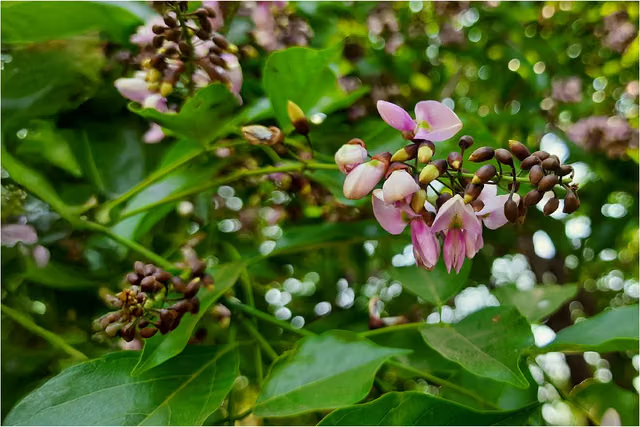
Pongamia pinnata, commonly known in India as Karanja, is a hardy leguminous
tree traditionally found across many parts of the Indian subcontinent. It
produces oil-rich seeds and has long been used in traditional and industrial
applications.
For us, Pongamia represents an opportunity to connect agriculture, land
development, rural livelihoods and renewable energy. Its non-edible oil makes
it particularly interesting for non-food applications and renewable fuel
pathways.
Close-up of Karanja seed pods on branch image/pongamia-pods.jpg
The potential of Pongamia
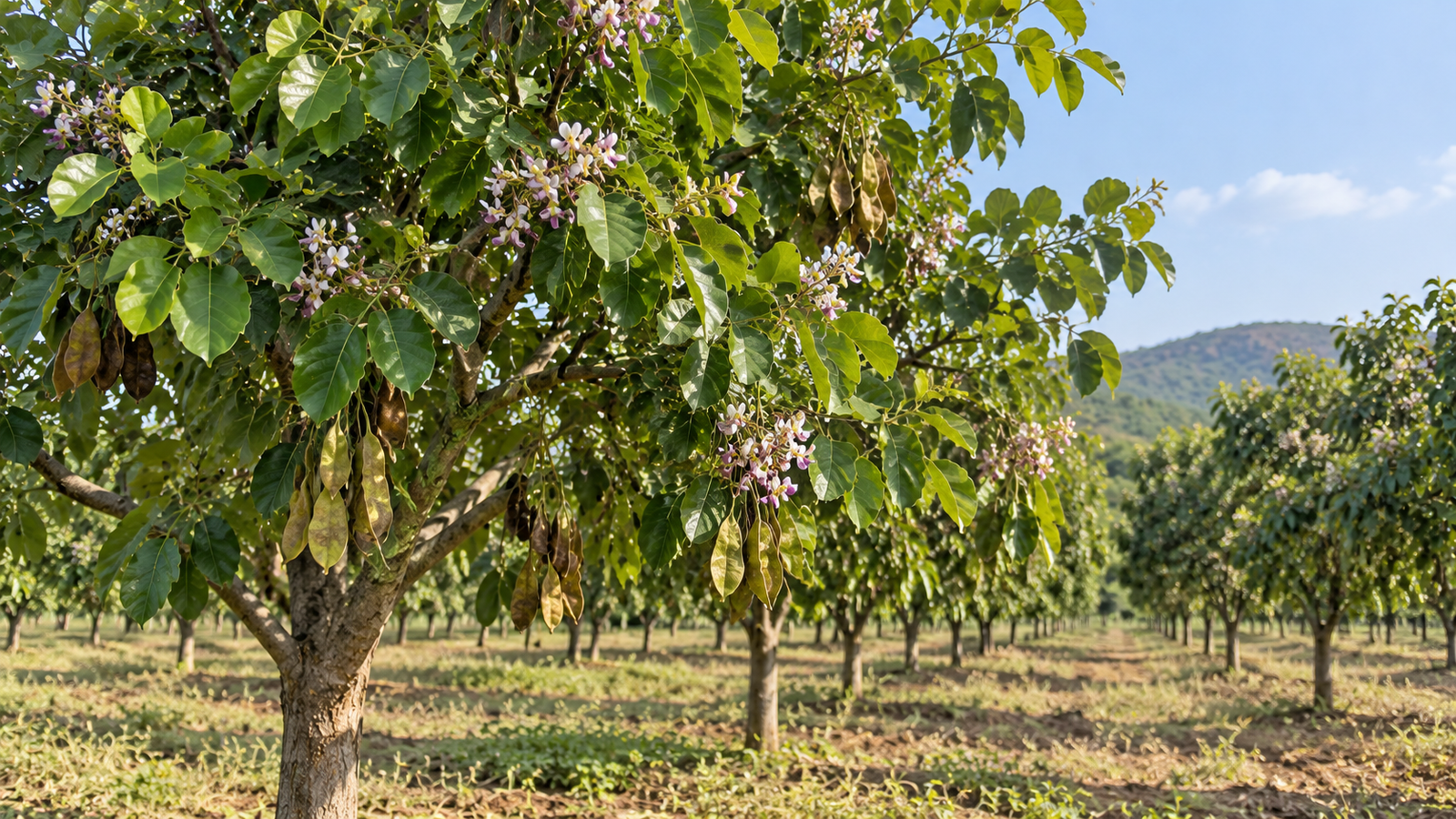
Pongamia can potentially be cultivated on suitable marginal or underutilised
land, subject to local soil, water, climate and agronomic conditions. As a
leguminous species, it has nitrogen-fixing potential through its association
with nitrogen-fixing bacteria, which can contribute to soil nutrient cycling
in suitable systems.
The opportunity is broader than oil alone. A well-designed Pongamia programme
can create value from the tree, seed, oil and remaining meal/cake while
creating a long-term agricultural asset for participating landowners and
communities.
Young Pongamia sapling being planted by farmer image/pongamia-sapling.jpg
A high-yielding future
Our programme is focused on identifying and developing high-performing
Pongamia planting material and cultivation practices suited to Indian
conditions. Yield is influenced by wild variety, plantation age, spacing,
climate, soil, water availability, management and harvesting practices.
Our objective is to develop commercially viable, scalable plantations with
transparent agronomic data rather than relying on unverified yield promises.
Pongamia oil in glass bottle with seeds image/Pongamia oil.png
Pongamia Oil
A renewable feedstock for the next generation of fuels
Our focus is on building a consistent, traceable and scalable supply of
Pongamia seed and oil to meet the quality, sustainability and traceability
requirements of downstream renewable fuel partners.
Through responsible sourcing, plantation development and supply-chain
partnerships, we are working to create a reliable Pongamia oil value chain
designed for long-term renewable fuel applications, including sustainable
aviation fuel.
We combine feedstock development with quality management and traceability
to support a dependable supply from seed to oil and, ultimately, to
renewable fuel markets.
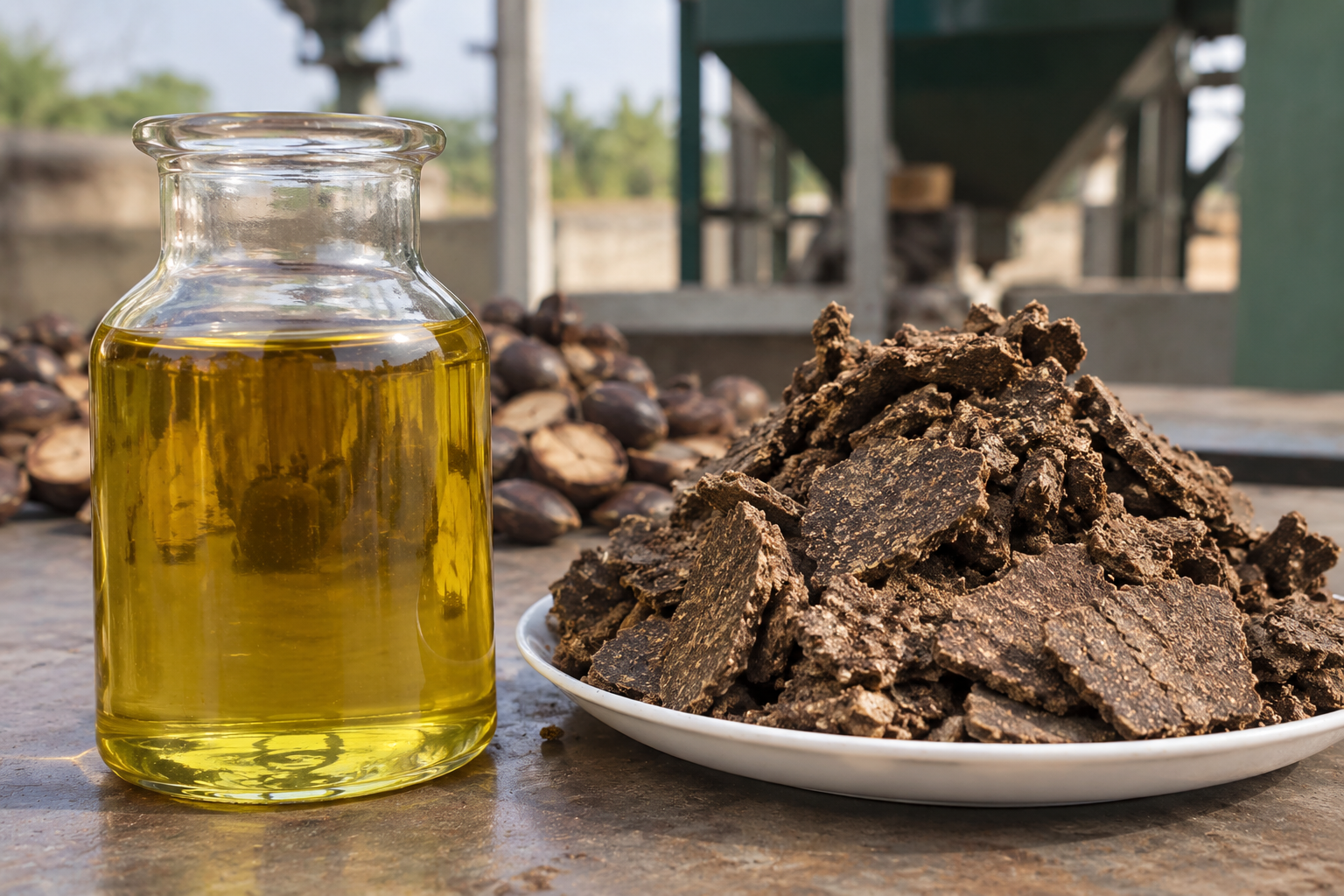
Pressed Pongamia oil and cake / meal side by side image/pongamia-oil-cake.jpg
Pongamia Cake & Meal
Unlocking value beyond the oil.
Oil extraction from Pongamia seeds produces a nutrient-containing cake or meal that represents an important opportunity to maximise the value of the overall Pongamia value chain. Its composition and suitability depend on the variety, extraction process and subsequent treatment. We are exploring safe, value-added applications for Pongamia meal, including agricultural uses and, subject to appropriate processing, regulatory approval and safety validation, potential feed-related applications.
Our approach goes beyond a single-product model. By developing responsible pathways for both oil and residual biomass, we aim to improve resource efficiency, support circularity and create additional value across the Pongamia supply chain.
Why Pongamia and how we're approaching it
Non-edible, hardy and land-friendly, six reasons Pongamia stands out as a feedstock, and the disciplined approach we build around each one.
Non-Edible Oilseed
Non-edible oilseed with potential for renewable fuel applications.
Marginal-Land Potential
Potential to be cultivated on suitable underutilised land.
Nitrogen-Fixing
Leguminous tree with nitrogen-fixing potential.
Long-Lived Perennial
Long-lived perennial crop with potential for recurring seed production once established.
Rural Income & Jobs
Potential to create additional rural income and employment.
Integrated Value Chain
Opportunity to build an integrated value chain around seed, oil and oil cake/meal.
Our approach is partnership-led: identify suitable land, work with farmers and
landowners, develop reliable planting and agronomic practices, build traceability,
and create dependable routes to market.
Used Cooking Oil
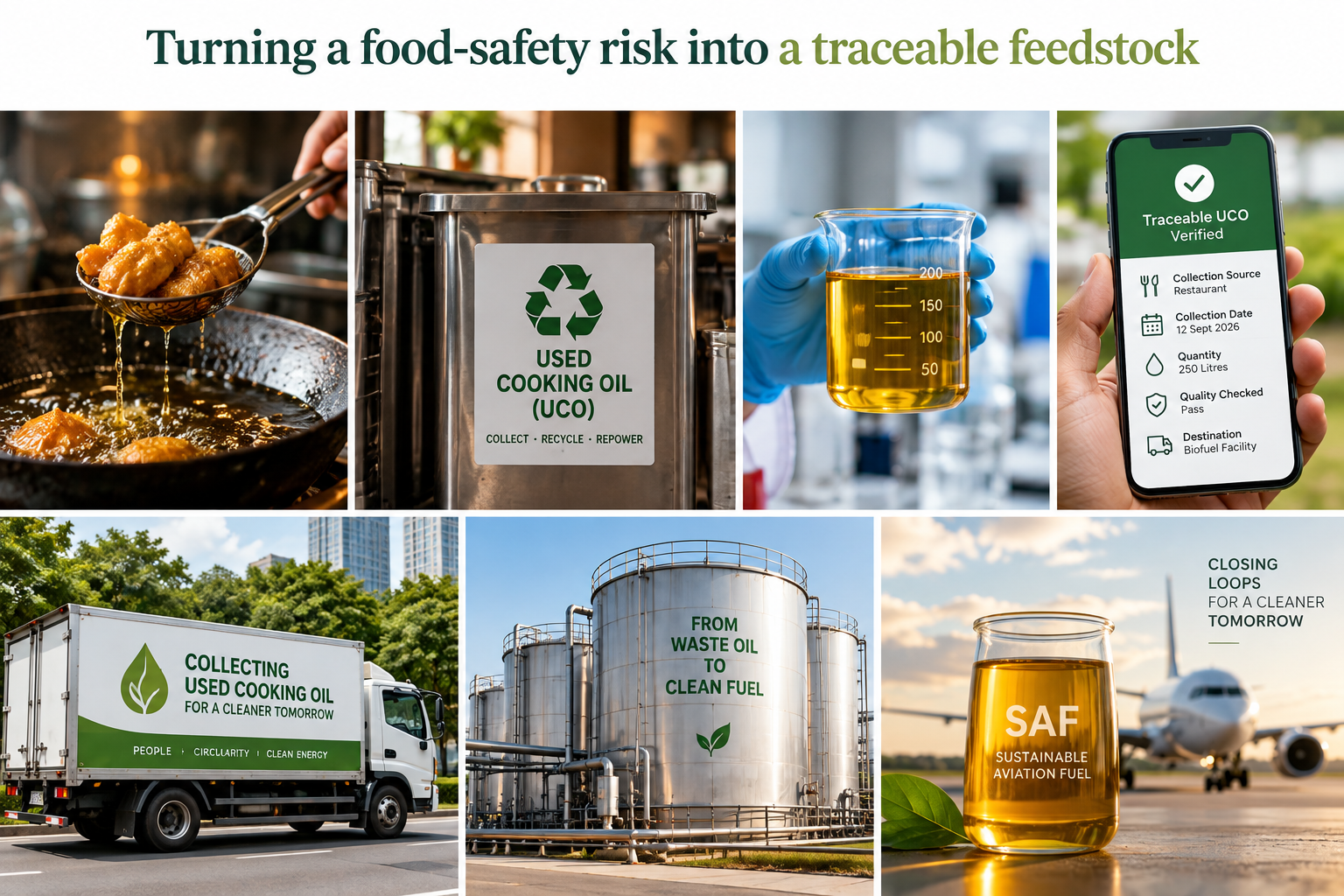
Turning a food-safety risk into a traceable feedstock
Used Cooking Oil is generated every day by restaurants, hotels, caterers,
food-service businesses and other commercial kitchens. When it is discarded
improperly, it can create waste-management problems; when it is diverted back
into the food chain, it creates a serious food-safety concern.
Recovering UCO through a controlled collection network creates an alternative:
a waste stream can be redirected into legitimate industrial uses and renewable
fuel pathways.
The opportunity is to formalise a fragmented collection ecosystem and bring
greater visibility to where UCO comes from, how it is collected, how it is
stored and where it ultimately goes. We aim to connect food-service
establishments with responsible collection channels while building
documentation and traceability required by downstream customers and applicable
sustainability schemes.
The HORECA collection model
Our collection network can work with Hotels, Restaurants and Cafés (HORECA),
along with caterers, institutional kitchens, food manufacturers and other
suitable commercial generators.
01
Onboarding
Identify eligible UCO generators and establish a collection relationship.
02
Collection
Schedule regular pickup based on generation volume and location.
03
Segregation
Keep UCO separate from general waste and unsuitable materials.
04
Storage
Use appropriate containers and handling practices to minimise contamination.
05
Documentation
Maintain records of collection quantities, source details and movement.
06
Aggregation
Consolidate UCO through controlled collection points and logistics.
07
Quality
Inspect incoming material and manage quality parameters required by buyers.
08
Traceability
Build a documented chain from source to final delivery, subject to applicable certification and customer requirements.
Our long-term network can extend to food processors, institutional kitchens,
caterers, canteens and other commercial generators where collection can be
conducted responsibly and economically.
For renewable fuel markets, feedstock origin and sustainability evidence can be
as important as physical quality. Our objective is to build traceability from
the first transaction rather than attempting to reconstruct the supply chain
later. We aim to develop a network that is transparent, scalable and compatible
with applicable certification and sustainability requirements.
Sustainability
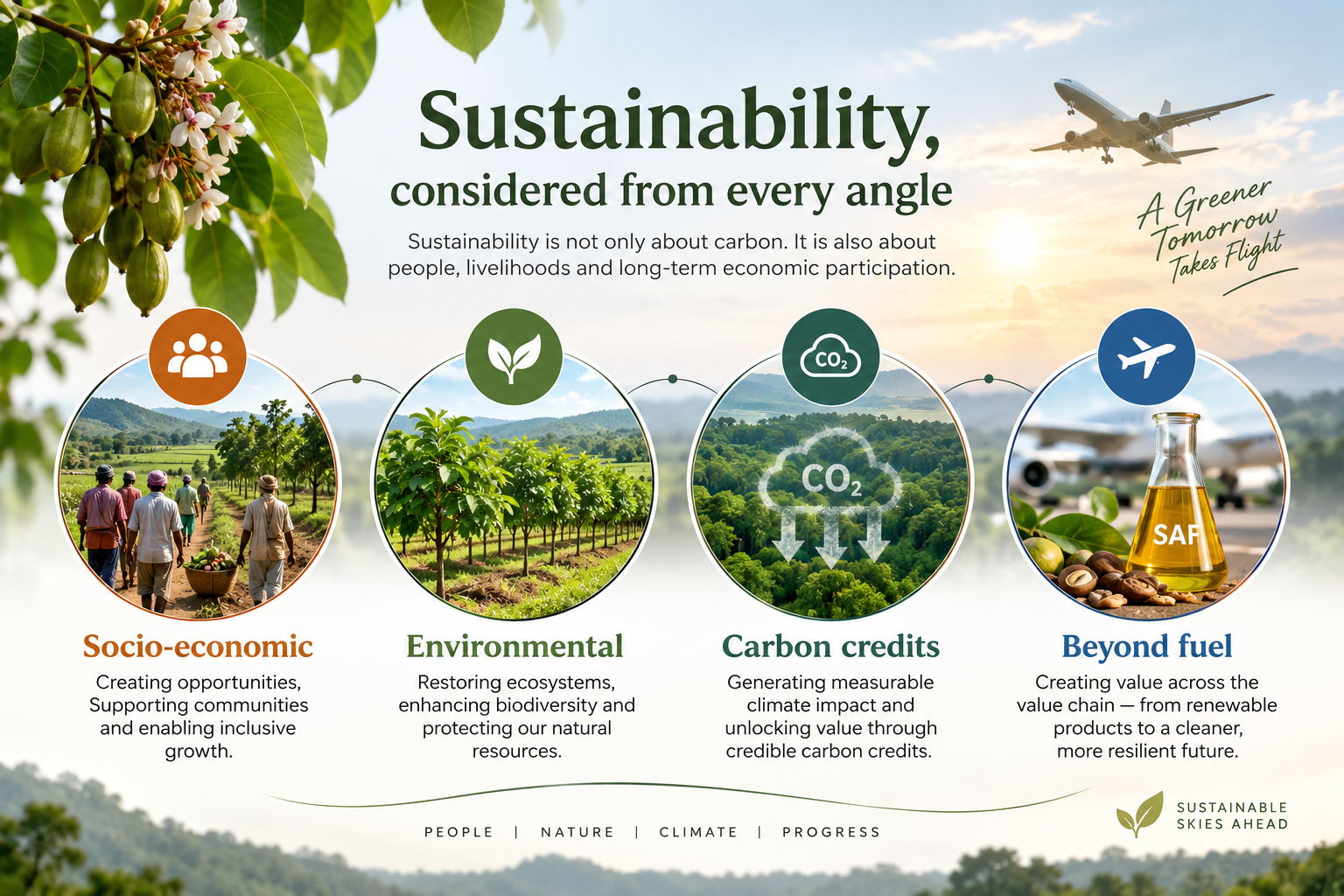
Sustainability, considered from every angle
Sustainability is not only about carbon. It is also about people, livelihoods
and long-term economic participation.
Our model is designed to create opportunities across the value chain,
from Pongamia cultivation and seed aggregation to oil processing, UCO
collection, logistics and associated services.
Local employment across collection, aggregation, processing, plantation and logistics activities
Additional income opportunities for farmers and landowners through suitable Pongamia cultivation models
Participation of local entrepreneurs and collection partners in the UCO ecosystem
Long-term relationships with communities rather than short-term extraction of value
Development of rural and semi-urban supply-chain infrastructure
Our objective is to build a business where the growth of the renewable
feedstock ecosystem also creates tangible local economic value.
The transition from fossil-derived jet fuel to Sustainable Aviation Fuel can
reduce lifecycle greenhouse-gas emissions when SAF is produced from qualifying
sustainable feedstocks and processes. The actual reduction depends on
feedstock, land-use impacts, production pathway, energy inputs, transport,
processing and the methodology used to calculate lifecycle emissions.
Pongamia and UCO can offer different sustainability advantages: Pongamia
provides an opportunity to develop a renewable non-food oilseed resource,
while UCO enables the recovery of an existing waste stream. Responsible
sourcing and robust traceability are essential to ensuring that
environmental benefits are real and measurable.
Our goal is to support renewable fuel supply chains that are scientifically
assessed, responsibly sourced and aligned with applicable sustainability
standards.
Pongamia programmes may have potential for carbon-related environmental
attributes where the underlying project, methodology, additionality,
monitoring and verification requirements are met. Potential value can arise
from factors such as biomass accumulation and soil-related carbon outcomes,
depending on the project design and applicable methodology.
Carbon credits should not be assumed simply because a plantation is
established. Any crediting opportunity must be assessed under an appropriate
methodology and independently verified where required.
We intend to explore credible carbon and environmental-attribute
opportunities alongside the physical feedstock business.
Our vision for Pongamia extends beyond oil for fuel. We are exploring
opportunities to develop higher-value applications across the Pongamia
value chain.
Pongamia-based bioplastic potential. Pongamia oil contains
fatty acids and other components that may be suitable starting points for
research into bio-based polymers, coatings, resins and other materials.
Commercial viability depends on formulation, processing, performance,
economics and regulatory requirements.
Value from Pongamia meal. The protein-rich fraction
remaining after oil extraction may offer opportunities for value-added
applications. With appropriate detoxification, safety testing, nutritional
validation and regulatory approval, future research could explore feed or
other protein-related applications. This is an area for development rather
than a current claim of suitability.
Our goal is simple: maximise the value of every seed, every litre and every partnership.
Let's build the future together
We are building a global network around Pongamia, Used Cooking Oil and
sustainable feedstocks for renewable fuels. Whether you are a farmer,
landowner, UCO generator, collector, logistics partner, technology provider,
fuel producer, investor or sustainability partner, we welcome meaningful
conversations.
We are happy to collaborate with partners across India and around the world
who share our interest in building reliable, traceable and sustainable
feedstock supply chains.
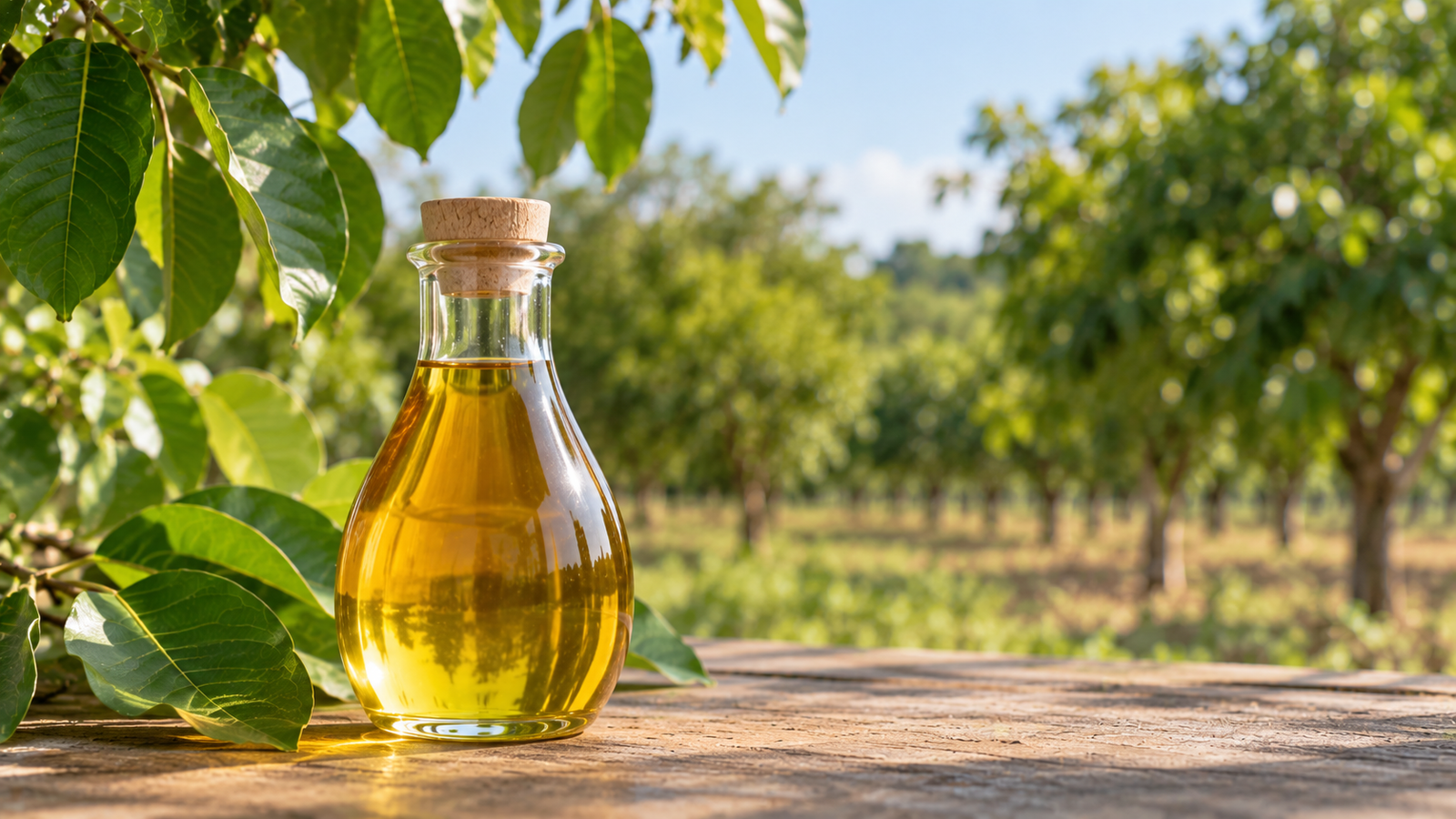
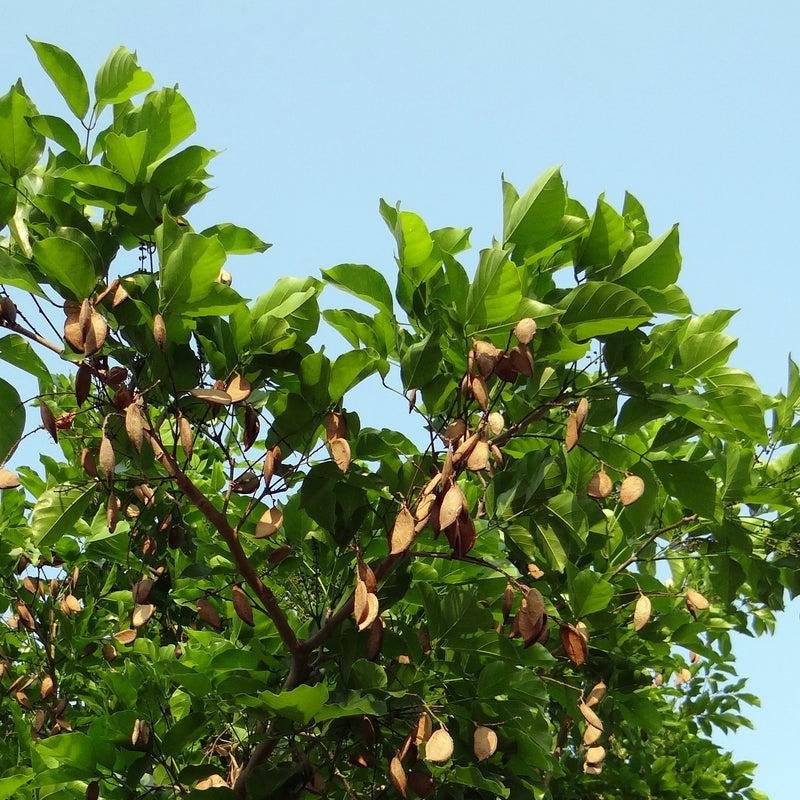 Pongamia / Karanja tree plantation on marginal land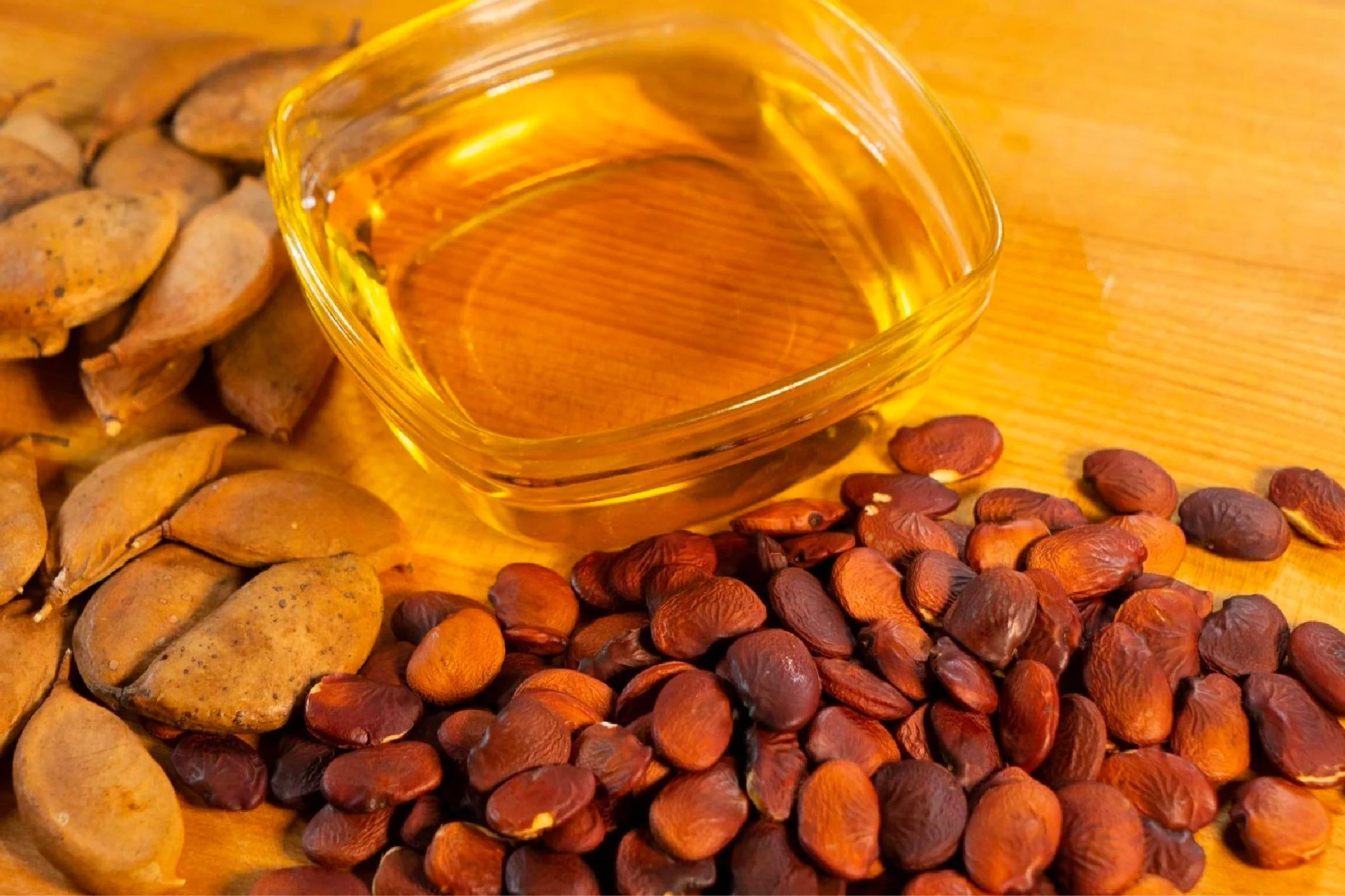
.png)
.png)
.png)