Non-Edible Oilseed
Non-edible oilseed with potential for renewable fuel applications, without competing with the food supply.
Pongamia (Karanja)
Pongamia pinnata, commonly known in India as Karanja, is a hardy leguminous tree with oil-rich seeds and a long traditional history. We see it as an opportunity to connect agriculture, land development, rural livelihoods and renewable energy, one plantation at a time.
A super-feedstock, reconsidered
Pongamia produces oil-rich seeds and has long been used in traditional and industrial applications across the Indian subcontinent. Its non-edible oil is what makes it particularly interesting to us, it does not compete with food crops, yet it can be grown on land that is often left idle or underused.
For us, Pongamia represents an opportunity to connect four things that don't always meet: agriculture, land development, rural livelihoods and renewable energy. A well-managed plantation can generate income for a landowner for decades, while steadily building a domestic, traceable feedstock base for India's growing renewable fuel industry.
We approach Pongamia development the way we would want a long-term partner to: with transparent agronomic data, realistic expectations on yield, and a genuine partnership with the farmers and landowners who make the programme possible.
From land to litre
A well-designed Pongamia programme creates value at every stage, not just at the point of oil extraction. Here is how we think about each part of the value chain.
Pongamia can potentially be cultivated on suitable marginal or underutilised land, subject to local soil, water, climate and agronomic conditions. As a leguminous species, it has nitrogen-fixing potential through its association with nitrogen-fixing bacteria, which can contribute to soil nutrient cycling in suitable systems.
The opportunity is broader than oil alone. A well-designed Pongamia programme can create value from the tree, seed, oil and remaining meal/cake while creating a long-term agricultural asset for participating landowners and communities.
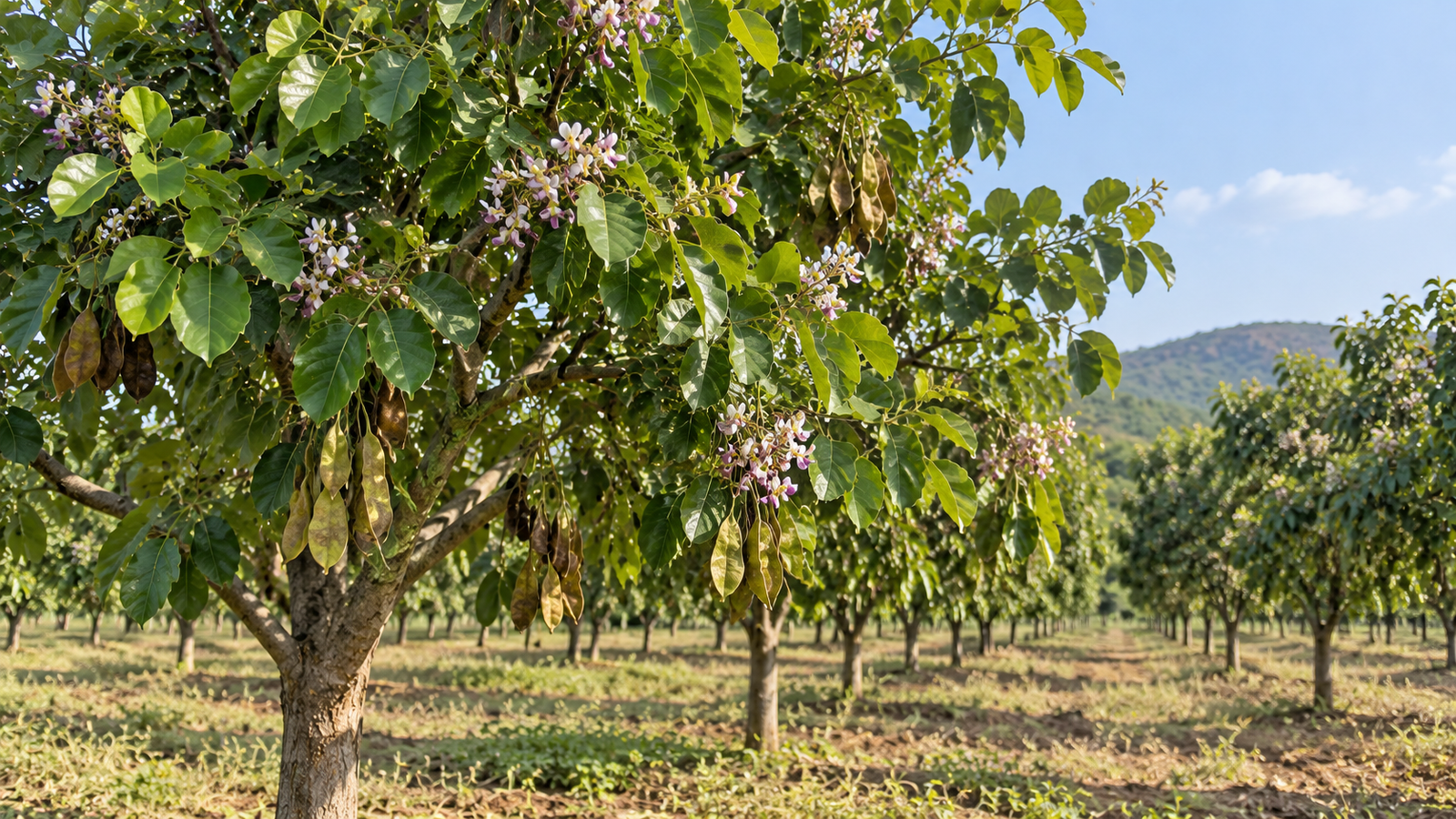
Our programme is focused on identifying and developing high-performing Pongamia planting material and cultivation practices suited to Indian conditions. Yield is influenced by wild variety, plantation age, spacing, climate, soil, water availability, management and harvesting practices.
Our objective is to develop commercially viable, scalable plantations with transparent agronomic data rather than relying on unverified yield promises.
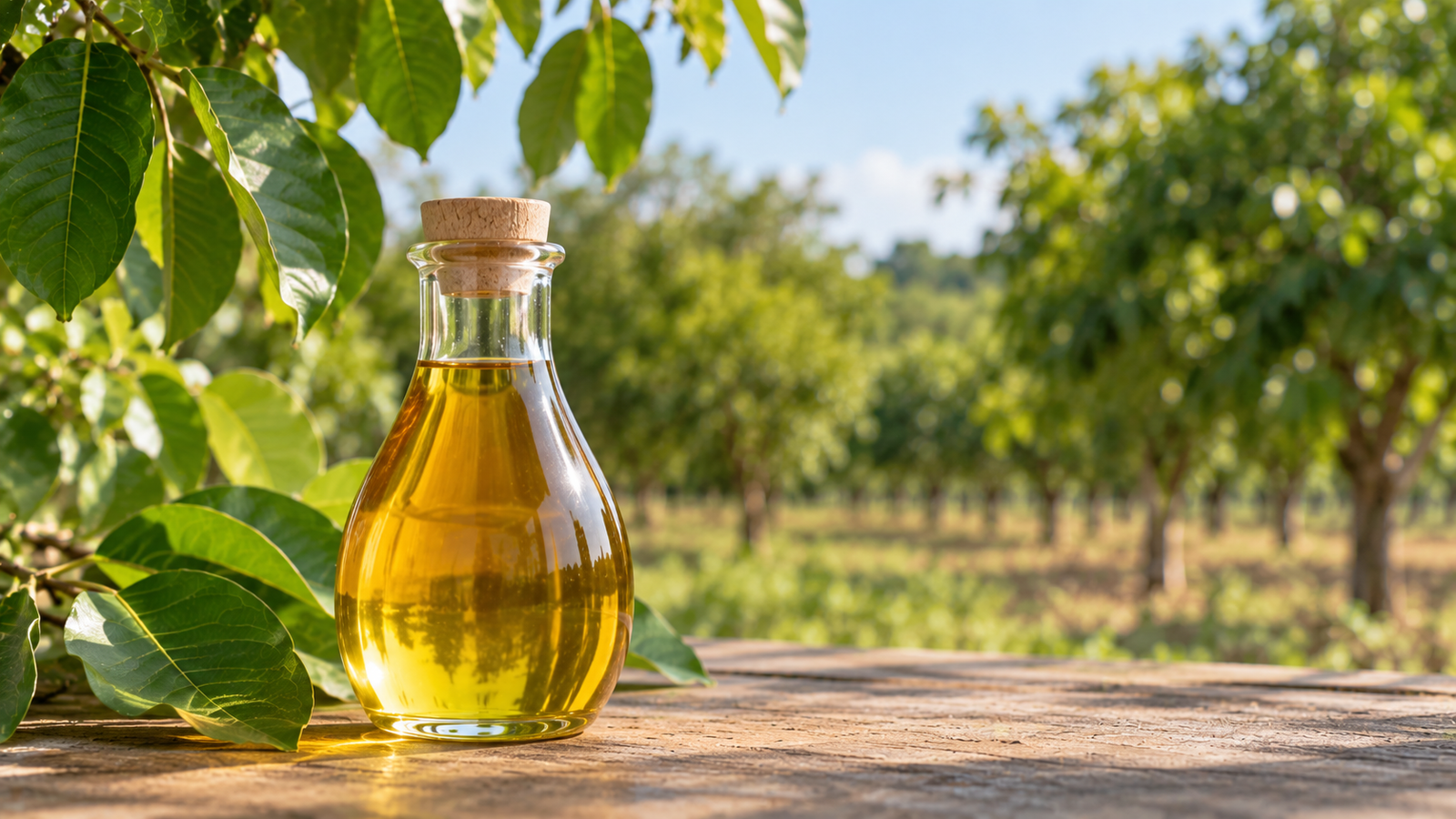
Our focus is on building a consistent, traceable and scalable supply of Pongamia seed and oil to meet the quality, sustainability and traceability requirements of downstream renewable fuel partners.
Through responsible sourcing, plantation development and supply-chain partnerships, we are working to create a reliable Pongamia oil value chain designed for long-term renewable fuel applications, including sustainable aviation fuel.
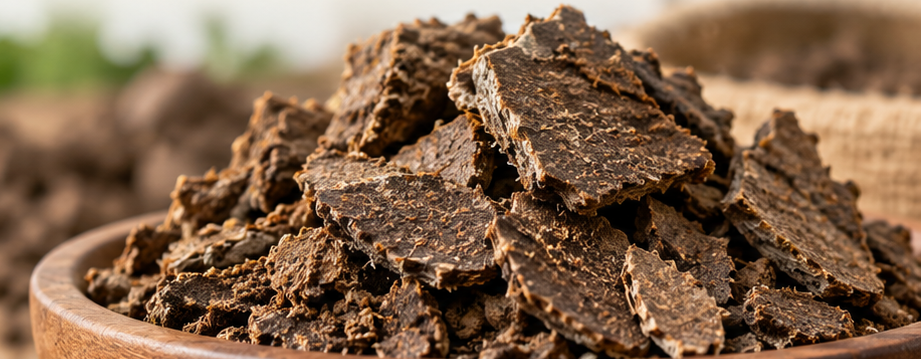
Unlocking value beyond the oil.
Oil extraction from Pongamia seeds produces a nutrient-containing cake or meal that represents an important opportunity to maximise the value of the overall Pongamia value chain. We are exploring safe, value-added applications for Pongamia meal, including agricultural uses and, subject to appropriate processing, regulatory approval and safety validation, potential feed-related applications.
Non-edible, hardy and land-friendly, six reasons Pongamia stands out as a feedstock, and the disciplined approach we build around each one.
Non-edible oilseed with potential for renewable fuel applications, without competing with the food supply.
Potential to be cultivated on suitable underutilised land, unlocking value from idle acreage.
Leguminous tree with nitrogen-fixing potential that can support soil nutrient cycling.
A long-lived perennial crop with potential for recurring seed production once established.
Potential to create additional rural income and employment across plantation and logistics activities.
Opportunity to build an integrated value chain around seed, oil and oil cake/meal.
Our approach is partnership-led: identify suitable land, work with farmers and landowners, develop reliable planting and agronomic practices, build traceability, and create dependable routes to market.
Our process
Every litre of Pongamia oil that leaves our facility carries a documented journey. Here is how a Pongamia programme typically moves from identifying land to reaching a renewable fuel producer.
Identify suitable marginal or underutilised land and interested farmers or landowners.
Establish a transparent, long-term partnership arrangement for plantation development.
Source and develop high-performing planting material suited to local conditions.
Establish plantations with agronomic support and ongoing management guidance.
Track growth, soil health and yield data through the maturation period.
Collect seeds at maturity and aggregate volumes through organised collection points.
Process seed into oil and cake/meal under quality-controlled conditions.
Deliver documented, traceable Pongamia oil to renewable fuel and industrial partners.
Common questions
No. Pongamia (Karanja) oil is non-edible, which is part of what makes it attractive as a dedicated feedstock for fuel and industrial applications, it does not compete with food-grade oilseed supply.
Pongamia can potentially be cultivated on suitable marginal or underutilised land, subject to local soil, water, climate and agronomic conditions. Suitability is assessed case by case with landowners.
We work through genuine, long-term partnerships, identifying suitable land, supporting planting and agronomic practices, and building a transparent route to market for the resulting seed and oil.
The Pongamia cake or meal that remains after oil extraction is an area of active development for us, we are exploring safe, value-added agricultural and, subject to regulatory approval, feed-related applications.
We are always looking to speak with farmers, landowners and aggregators interested in building a long-term Pongamia partnership.