Pongamia Plantation
Pongamia Plantation India: Growing Trees, Empowering Farmers
Our Pongamia Plantation India programme partners with farmers to plant Karanja trees on marginal and wasteland areas, creating a long-term income stream while building the raw-material base for a traceable renewable-feedstock supply chain.
Pongamia Plantation India programmes plant Pongamia (Karanja) trees, typically on marginal or wasteland areas, so farmers earn long-term income from seed sales while supplying a non-edible oilseed for biofuel and industrial use. Ranjit Oil Mills India runs such a plantation programme from its base in Masur, Pune.
Trees that pay farmers for decades
How our Pongamia plantation programme works
A Pongamia Plantation India programme is, at its core, a long-term agreement between a mill and its farmers: land that would otherwise sit idle is planted with Pongamia (Karanja) trees, and once the trees mature, the mill buys the seed they produce, season after season.
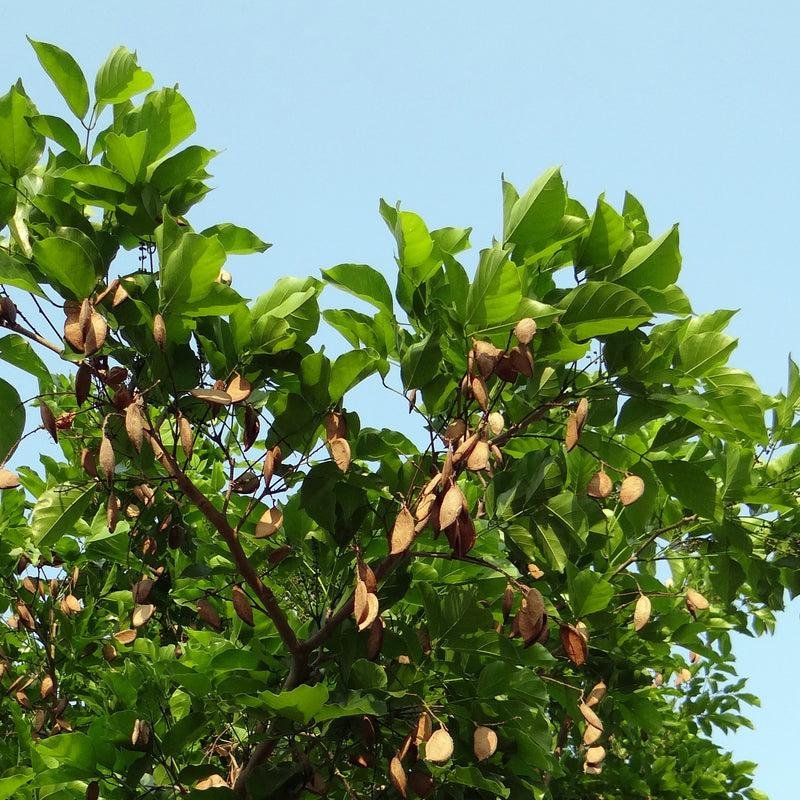
Ranjit Oil Mills India works directly with farmers in and around Masur, Pune, to identify suitable marginal or wasteland plots, support planting, and stay engaged through the years it takes for young Pongamia trees to reach productive seed-bearing maturity. Because Pongamia tolerates poor soils and low water availability better than most food crops, it is well suited to land that would otherwise generate little or no income.
Once mature, a single Pongamia tree can keep producing seed for decades, turning what began as an afforestation effort into a recurring source of farmer income and a dependable raw-material base for our oil-pressing operations.
Why choose us
Why our plantation model works
Our Pongamia Plantation India approach is designed to benefit farmers, communities and the supply chain at the same time.
Marginal-Land Focus
Plantations are established on wasteland and low-yield plots, not land suited to food crops.
Long-Term Farmer Income
Mature Pongamia trees generate recurring seed income across multiple decades.
Guided Support
Our team supports farmers through planting, early growth and eventual seed collection.
Guaranteed Offtake
Seed produced by partner farmers feeds directly into our own mill for oil pressing.
The plantation journey
From bare land to productive Pongamia trees
A Pongamia plantation is a multi-year commitment, and we stay involved through each stage.
Land Identification
Suitable marginal, degraded or underused plots are identified in partnership with local farmers.
Farmer Onboarding
We discuss the plantation model, timelines and expected returns with interested farmers.
Sapling & Planting
Pongamia saplings are planted with guidance on spacing and early-stage care.
Growth Monitoring
Young trees are monitored through their initial growth years before seed-bearing begins.
Seed Collection
Once mature, seasonal Karanja seed is collected from plantation plots.
Guaranteed Purchase
Collected seed is purchased and transported to our mill for pressing into oil.
Community & environmental impact
More than a supply chain: land, trees and communities
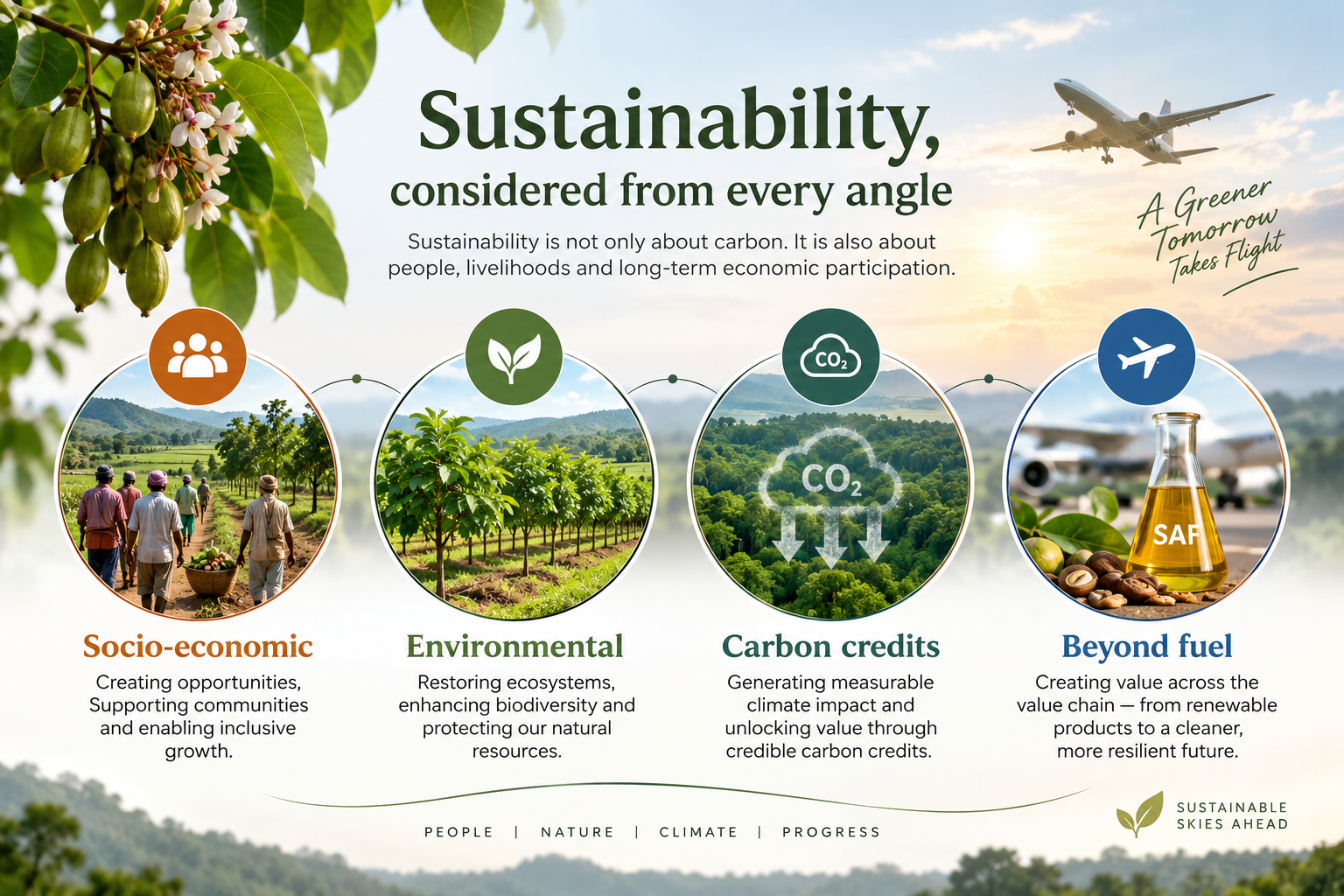
Beyond feedstock supply, a Pongamia Plantation India programme has a wider community impact. Planting trees on wasteland improves soil condition over time, provides shade and, in many cases, supports local biodiversity, all while giving farmers a reason to actively manage land that might otherwise be left unused or degraded.
This is why our company tagline — growing trees, empowering communities, fuelling aviation — captures the full arc of the model. What starts as a plantation partnership with an individual farmer eventually becomes part of a renewable feedstock chain that can supply biodiesel producers and, increasingly, Sustainable Aviation Fuel refiners.
Common questions
Pongamia plantation — common questions
We focus on marginal, degraded or wasteland plots that are not well suited to food-crop cultivation, so plantation activity does not compete with farmers' food production.
Pongamia trees typically take several years to reach productive maturity, after which they can continue producing seed seasonally for decades.
Yes, seed produced by partner farmers under our plantation programme is purchased directly and transported to our mill in Masur, Pune, for pressing.
Interested farmers can get in touch through our contact page, and our plantation team will discuss land suitability, planting support and the seed offtake arrangement.
Explore more
Related feedstock solutions
Interested in a Pongamia Plantation India partnership?
Whether you are a farmer with marginal land or a partner organisation, let's talk about how our plantation model works.