Sustainable Sourcing
Sustainable Feedstock Supplier India Built on Traceability
Ranjit Oil Mills India positions itself as a Sustainable Feedstock Supplier India ESG-conscious buyers can defend to their own stakeholders, supplying non-edible Pongamia oil and traceable used cooking oil with documentation built in from the start.
A Sustainable Feedstock Supplier India business supplies raw materials, such as non-edible oils, sourced in ways that avoid food-crop competition and support documented traceability. Ranjit Oil Mills India supplies Pongamia oil and used cooking oil under this model from Maharashtra.
Sustainability as sourcing discipline
What sustainable feedstock sourcing actually requires
The word sustainable gets used loosely in feedstock marketing, but for a genuine Sustainable Feedstock Supplier India business, it needs to mean something specific: raw material that does not compete with food production, that is sourced through documented, auditable channels, and that ideally creates positive impact for the communities involved in growing or collecting it.
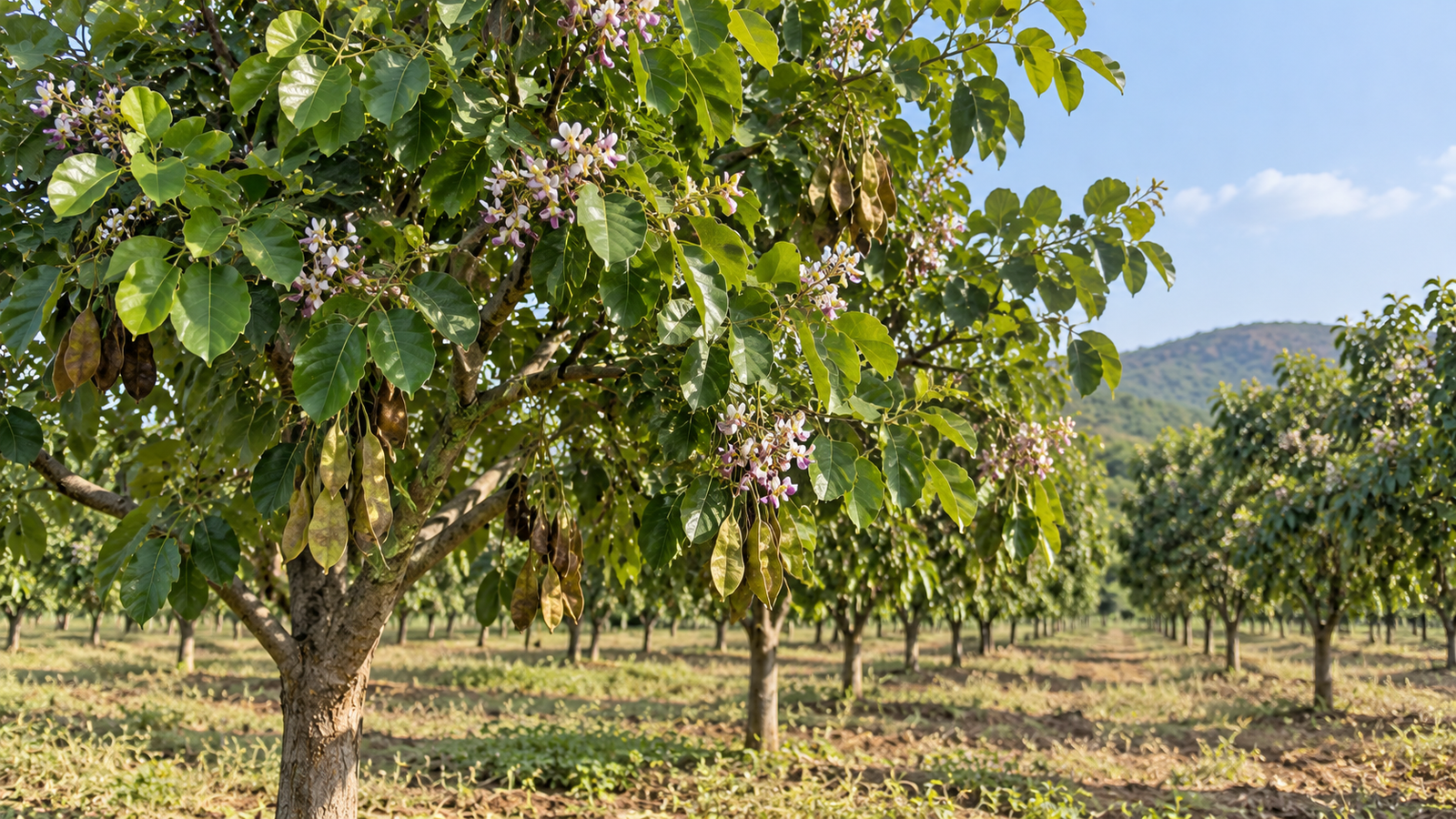
Our Pongamia oil supply meets the first test by design, Pongamia is a non-edible oilseed tree grown on marginal land unsuited to food crops. Our used cooking oil supply meets it differently, by diverting a genuine waste stream away from improper disposal or, worse, illegal reintroduction into the food chain, and into a productive industrial use instead.
Both supply chains also carry the second requirement, documentation, from the point of origin, whether a farmer's plantation plot or a restaurant kitchen, through to final dispatch, giving buyers a sourcing story they can actually stand behind.
Why choose us
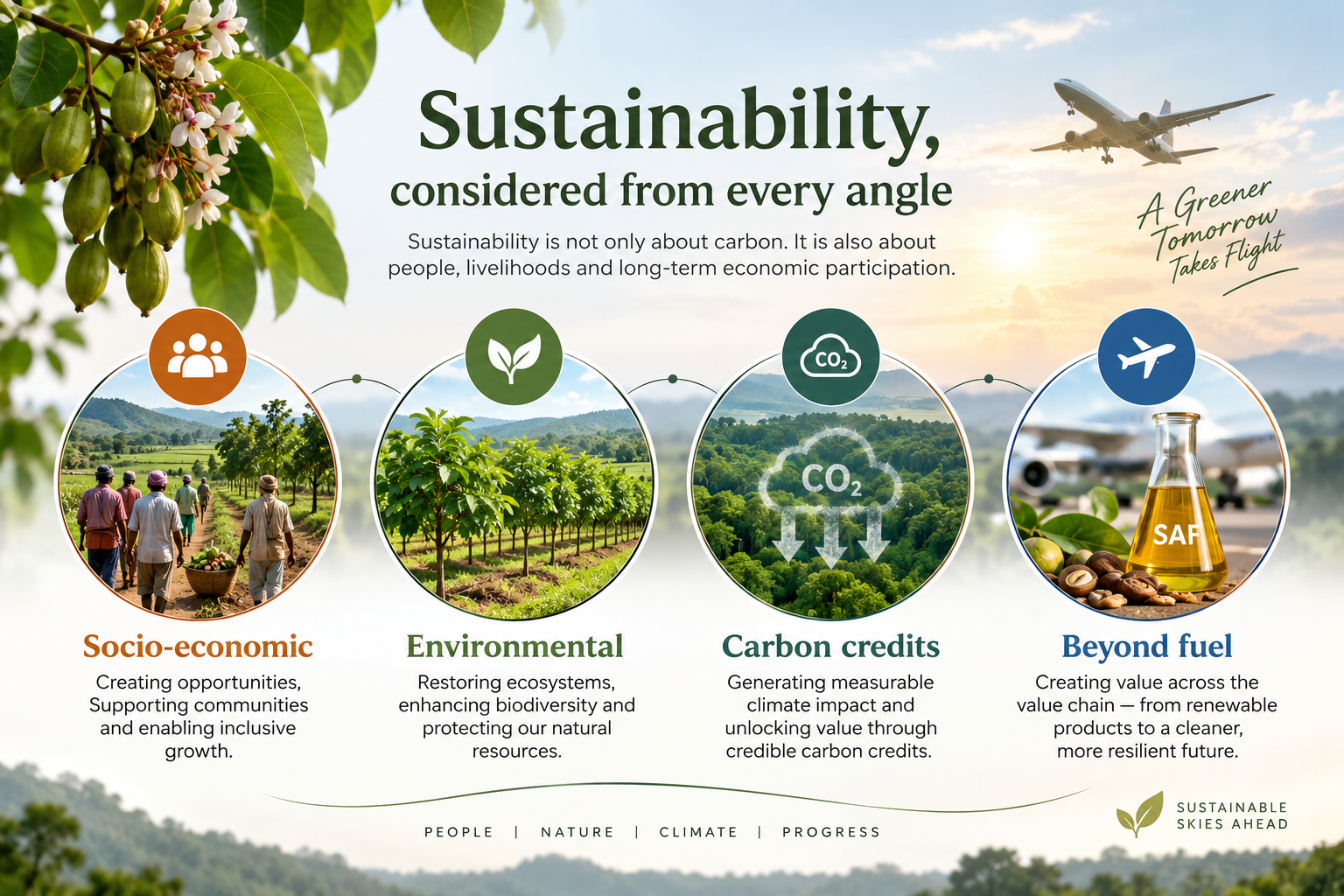
The sustainability case for our feedstock
As a Sustainable Feedstock Supplier India business, our claims rest on how the supply chain is actually built, not just how it's described.
No Food-Crop Competition
Pongamia grows on marginal land; UCO is a genuine waste product, not a diverted food resource.
Farmer Community Impact
Plantation partnerships create long-term income for farmers on underused land.
Food-Safety Benefit
Formal UCO collection closes the door on illegal reintroduction into the food chain.
End-to-End Documentation
Sourcing records are kept from origin through to dispatch, not assembled after the fact.
Sustainability, stage by stage
How sustainability is built into our supply chain
Each part of our operation is designed with a specific sustainability objective in mind.
Marginal-Land Plantations
Pongamia trees are grown on wasteland, avoiding food-crop land competition.
Farmer Income Support
Long-term seed offtake agreements give farmers a recurring income stream.
Formal UCO Collection
Structured kitchen pickups prevent UCO from re-entering the food chain.
Documented Traceability
Records at every stage support ESG and compliance reporting for buyers.
Our sustainability philosophy
Growing trees, empowering communities, fuelling aviation
Our company tagline reflects how we think about sustainable feedstock sourcing: it is not a single technical fix, but a chain of decisions, from which trees we plant and where, to how we collect used cooking oil, that together determine whether a supply chain genuinely deserves to be called sustainable.
As a Sustainable Feedstock Supplier India business, we see this as an ongoing commitment rather than a one-time claim, one we expect to keep strengthening as our plantation network matures and our UCO collection coverage expands into new regions.
Common questions
Sustainable feedstock sourcing — common questions
Sourcing that avoids food-crop competition, maintains documented traceability from origin to dispatch, and ideally supports the communities involved in production or collection.
Pongamia is a non-edible oilseed tree typically grown on marginal or wasteland areas that are not suited to food-crop cultivation.
It prevents used cooking oil from being illegally diverted back into the food chain and redirects a genuine waste stream into productive industrial use.
Yes, we maintain sourcing and handling records across both our Pongamia and UCO supply chains that can support buyer-side ESG reporting needs.
Explore more
Related feedstock solutions
Looking for a Sustainable Feedstock Supplier India partner?
Let's discuss your sourcing and documentation requirements in detail.