Pongamia · Plantation Network
Pongamia Plantation Network Behind Our Australia-Bound Oil
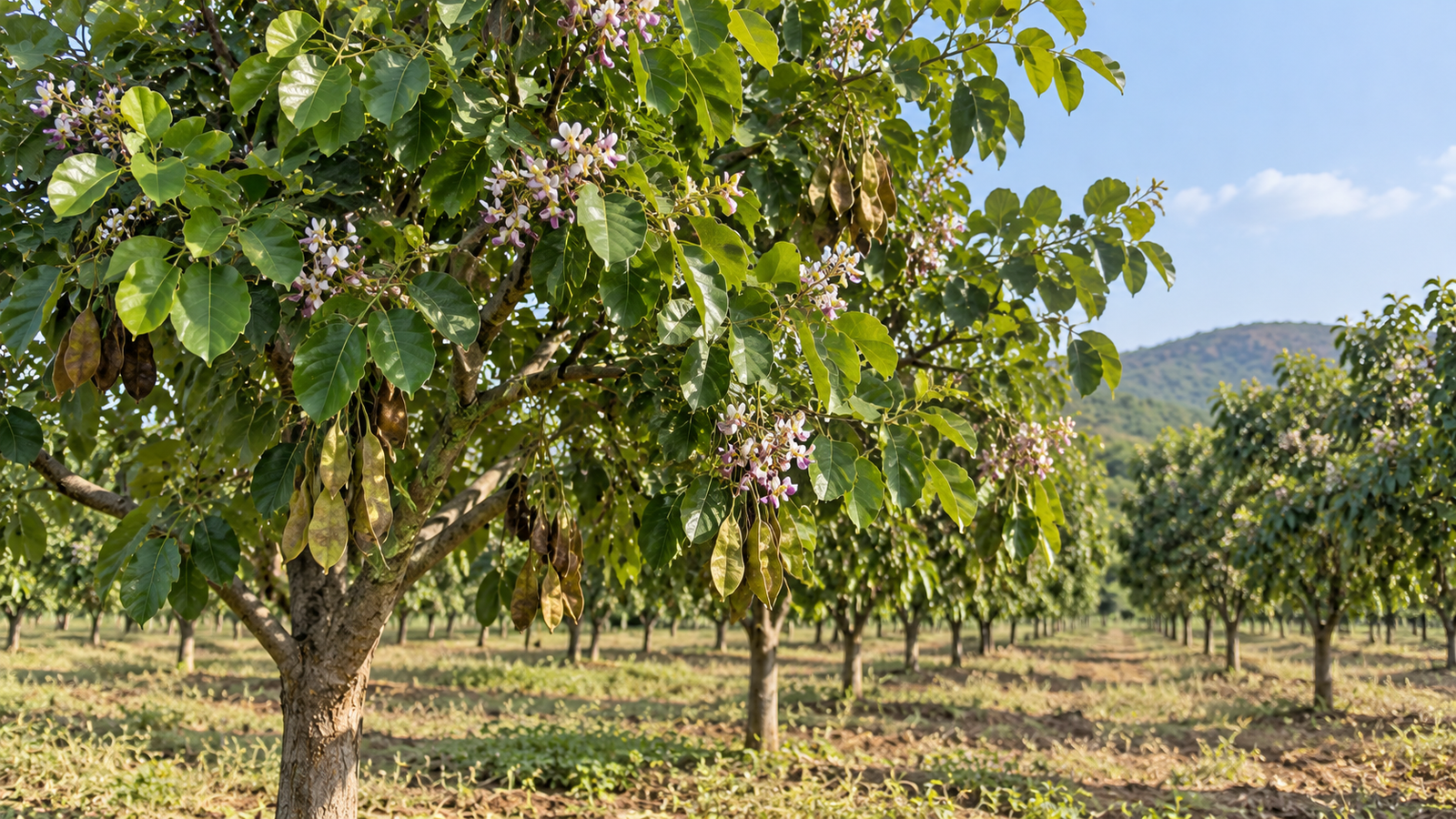
Rather than a nascent domestic planting programme, Australian buyers sourcing Pongamia oil from us are drawing on an established Maharashtra farmer plantation network already in productive yield.
For Australian buyers, Pongamia Plantation Australia supply currently means importing from established growing regions like our Maharashtra farmer network, since commercial-scale Pongamia plantations within Australia itself remain limited, even though related Pongamia populations occur naturally along parts of the country's coastline.
Where the seed actually comes from
The plantation network behind our Pongamia oil exports
A supplier can describe Pongamia oil in general terms, but the more useful question for an Australian buyer is where the seed physically comes from. Our answer is a farmer plantation network built up over years across Maharashtra, planted specifically on marginal land not suited to food-crop cultivation.
Pongamia trees take several years to reach full productive yield, but once established they remain productive for decades with comparatively low ongoing input, which is part of why an established network like ours can offer more dependable volume than a newly planted programme still working toward maturity.
For Australian buyers evaluating Pongamia Plantation Australia options, understanding that the practical near-term supply comes from established growing regions like ours, rather than from Australia's own limited Pongamia cultivation, is an important starting point for planning realistic sourcing timelines.
Why choose us
What our plantation network offers Australian buyers
Established trees, an organised farmer relationship and traceable sourcing all matter to volume reliability.
Established, Yielding Trees
Our network draws on plantations already in productive yield, not newly planted trees still years from harvest.
Long-Term Farmer Relationships
Plantation partners have worked with our mill over an extended period, supporting consistent seed supply.
Marginal-Land Cultivation
Plantations sit on land unsuited to food-crop farming, supporting a low-ILUC sourcing story.
Traceable Seed Sourcing
Seed can be traced back to the plantation partner and collection batch it came from.
How the plantation network supplies our mill
From farmer plantation to milled export oil
A structured relationship between plantation partners and our processing operation.
Plantation Partnership
Farmers cultivate Pongamia trees on marginal land as part of an ongoing supply relationship.
Seasonal Seed Collection
Seed is collected from plantation partners during the harvest season.
Transport to Mill
Collected seed is transported to our Masur facility for processing.
Seed Quality Grading
Seed is graded before pressing to support consistent oil quality.
Pressing & Export Prep
Graded seed is pressed into oil and prepared for export packing.
Farmer Payment Cycle
Plantation partners are paid through an established, recurring collection cycle.
Pongamia's Australian connection
Pongamia's natural range includes parts of Australia — but supply doesn't, yet
Pongamia pinnata, also classified as Millettia pinnata, is native across a wide Indo-Pacific range that includes coastal parts of northern and eastern Australia, which has fed ongoing Australian research interest in the tree as a potential domestic feedstock crop. That natural presence, however, has not yet translated into large-scale commercial Australian plantations capable of supplying industrial buyers.
In practice, that means Australian buyers looking to source Pongamia oil today are generally better served by established overseas plantation networks, like ours in Maharashtra, than by waiting on Australian cultivation to reach commercial scale. As and if Australian Pongamia cultivation matures, an import relationship can sit alongside it rather than being replaced by it, given how large the eventual feedstock demand is likely to be.
- Pongamia's native range includes parts of northern and eastern Australia
- Commercial-scale Australian Pongamia plantations remain limited today
- Established overseas networks currently offer the more realistic near-term supply
- Import supply and future domestic cultivation are complementary, not competing, options
Common questions
Pongamia plantation supply — common questions
Related Pongamia populations occur naturally in parts of Australia, but commercial-scale plantations capable of supplying industrial buyers remain limited today.
It comes from an established farmer plantation network across Maharashtra, India, built up over an extended period of milling operations.
Pongamia trees typically take several years to reach full productive yield, but remain productive for decades once established.
Our network continues to add plantation partners on suitable marginal land to support growing export demand over time.
Explore more
Related Australia & feedstock pages
Want to know more about our plantation sourcing?
Ask us about seed volumes, harvest seasons and how our farmer network supports export orders.