Sustainability · Feedstock
Sustainable Feedstock Supplier Australia — Built for Compliance
Australian buyers increasingly need to prove feedstock sustainability, not just claim it. Ranjit Oil Mills India works as a Sustainable Feedstock Supplier Australia buyers can build ESG and compliance reporting around.
A Sustainable Feedstock Supplier Australia buyers can rely on for ESG and compliance reporting needs traceable, non-edible, low-ILUC feedstock with batch-level records; Ranjit Oil Mills India supplies Pongamia oil and used cooking oil documented to support that reporting.
From claim to evidence
What 'sustainable feedstock' needs to mean in practice
Every feedstock supplier describes its product as sustainable; the more useful distinction for an Australian buyer is which suppliers can actually document that claim at the batch level. A genuine Sustainable Feedstock Supplier Australia buyers can rely on for compliance purposes needs records that trace an individual shipment back to its point of origin, not a general marketing statement about the supplier's overall approach.
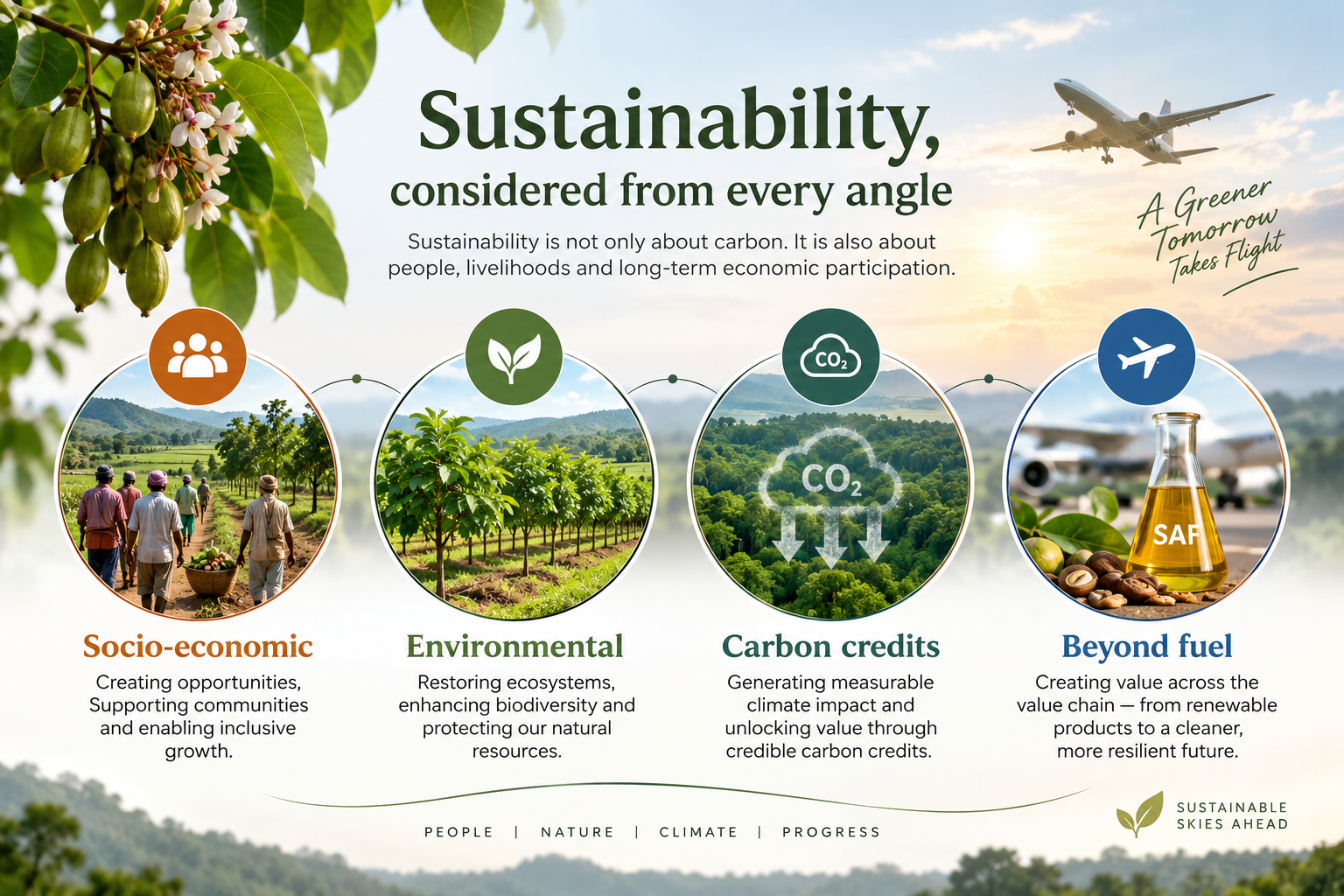
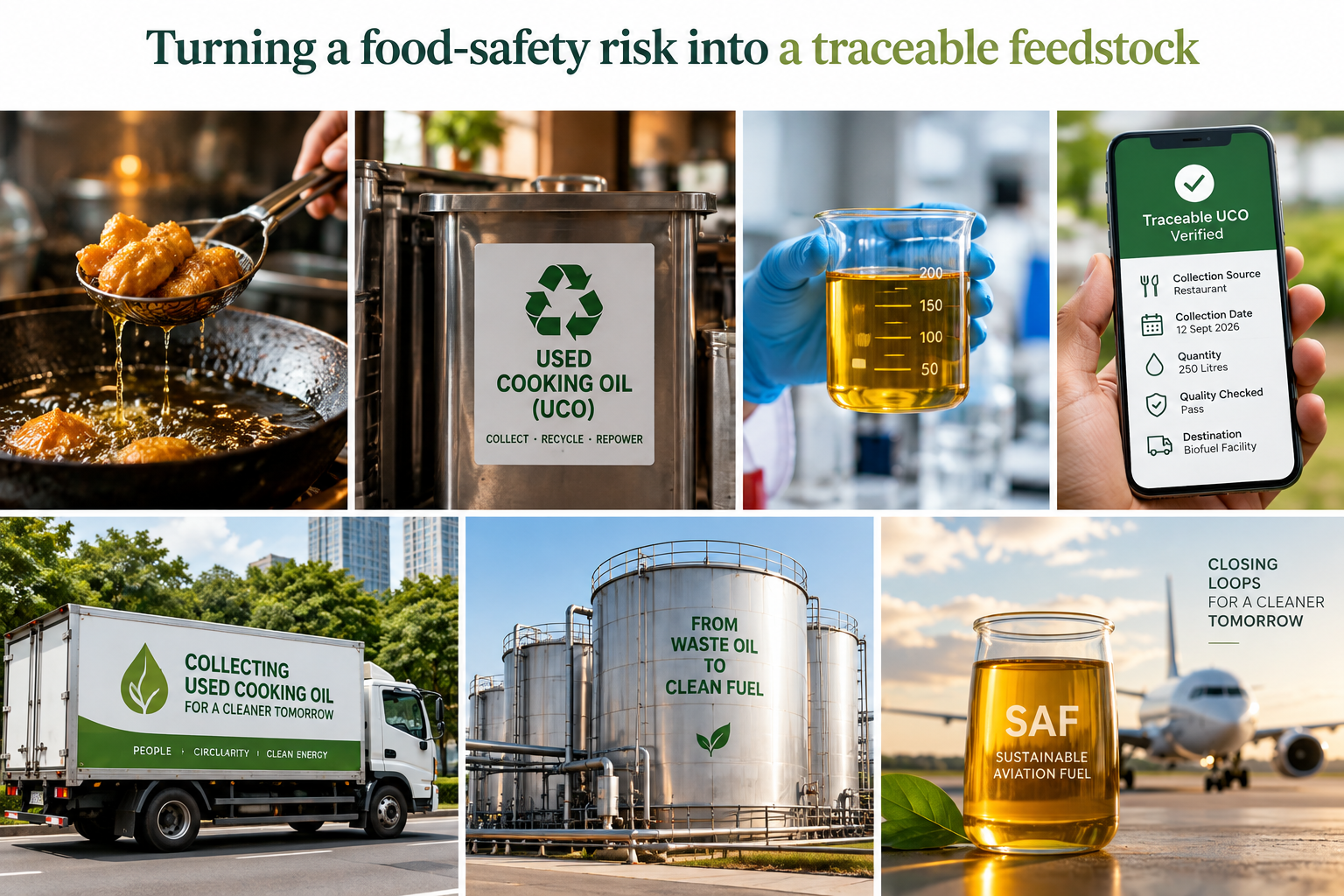
We supply two feedstocks whose sustainability case rests on structural facts rather than certification alone: non-edible Pongamia oil, grown on marginal land that does not compete with food production, and used cooking oil, which is a waste stream redirected into fuel rather than a newly cultivated input. Both are backed by batch-level sourcing and handling records compiled as part of our normal collection and pressing process.
For Australian buyers preparing sustainability reporting, environmental product declarations, or responses to certification schemes, having that documentation available at the batch level, rather than requested and reconstructed after the fact, materially simplifies their own compliance workload.
Why choose us
What our sustainability documentation covers
Buyers need specifics, not general assurances, when building their own compliance case.
Batch-Level Traceability
Each shipment can be traced back to its plantation or HORECA collection source.
Non-Edible & Waste Origin
Both feedstocks avoid food-crop displacement, one by land type and one by being a waste stream.
Consistent Record-Keeping
Sourcing records are built into our normal collection process, not created only on request.
Responsive Documentation Support
We work with buyers to provide the specific records their own reporting frameworks require.
How sustainability documentation is built
From collection to a documented, auditable shipment
Every stage of collection and processing adds to the documentation trail.
Source Logging
Plantation and HORECA collection points are logged at the point of sourcing.
Batch Tracking
Sourced material is tracked through pressing or filtration as a defined batch.
Quality & Origin Records
Quality test results are linked to each batch's origin record.
Documentation Compilation
Records are compiled into a package suited to the buyer's reporting needs.
Shipment Linking
Export shipments are linked back to their originating batch records.
Ongoing Buyer Support
Additional documentation can be provided on request to support specific frameworks.
Why this matters more each year
Rising documentation expectations for Australian feedstock buyers
Sustainability reporting requirements for Australian fuel producers and their feedstock suppliers have generally become more detailed over time, reflecting both domestic policy interest and the expectations of international certification frameworks used across the biofuel and SAF sector. Buyers who cannot produce batch-level sourcing evidence when asked are increasingly at a disadvantage, regardless of how sustainable their feedstock may genuinely be.
We built our sourcing and record-keeping processes around that reality from the outset, treating documentation as part of the product rather than an administrative add-on. For Australian buyers who expect their own reporting obligations to keep expanding, that head start is part of what a long-term supplier relationship with us offers.
- Documentation expectations for feedstock buyers continue to rise
- Batch-level evidence is increasingly required, not just supplier assurances
- Sourcing records are built during collection, not reconstructed later
- Two structurally low-impact feedstocks support a stronger baseline sustainability case
Common questions
Sustainable feedstock supply — common questions
Pongamia oil is grown on marginal land without displacing food crops, and used cooking oil is a redirected waste stream, giving both a structurally low-impact origin.
Yes, sourcing and handling records are compiled as part of our normal collection and processing workflow, not created only on request.
We work with buyers to provide the documentation their particular reporting framework requires, based on the records we already maintain.
Our documentation is tied to individual batches and shipments, so it can be checked against a specific consignment rather than treated as a general statement.
Explore more
Related Australia & feedstock pages
Need documentation to support your sustainability reporting?
Tell us which framework you report against and we will confirm what records we can provide.