Pongamia · SAF Feedstock
Pongamia SAF Feedstock for Australian Refiners & Fuel Developers
As a feedstock category, Pongamia SAF Feedstock offers Australian SAF projects a non-edible, low-ILUC oil that diversifies supply beyond used cooking oil — and Ranjit Oil Mills India exports it from a documented Maharashtra farmer network.
Pongamia SAF Feedstock is non-edible Pongamia (Karanja) oil used as an input into HEFA-based Sustainable Aviation Fuel production; Ranjit Oil Mills India supplies it to Australian buyers as a diversification feedstock alongside used cooking oil, from a traceable Indian farmer plantation network.
A feedstock category, not just a commodity
Why Pongamia is treated as a distinct SAF feedstock category
SAF policy discussions increasingly separate feedstocks into categories based on land use, food-market competition and lifecycle emissions. Pongamia SAF Feedstock sits in a favourable position on all three counts: it is grown on marginal land unsuited to food crops, it never enters a food-oil supply chain, and the tree itself is long-lived and low-input once established.
For Australian SAF developers building a feedstock strategy, that categorisation matters because most SAF mandates and voluntary sustainability frameworks reward feedstocks with a demonstrably low indirect land-use change (ILUC) risk. Pongamia's non-edible, marginal-land profile is part of why it continues to attract attention as a feedstock worth diversifying into, alongside the more widely used used cooking oil.
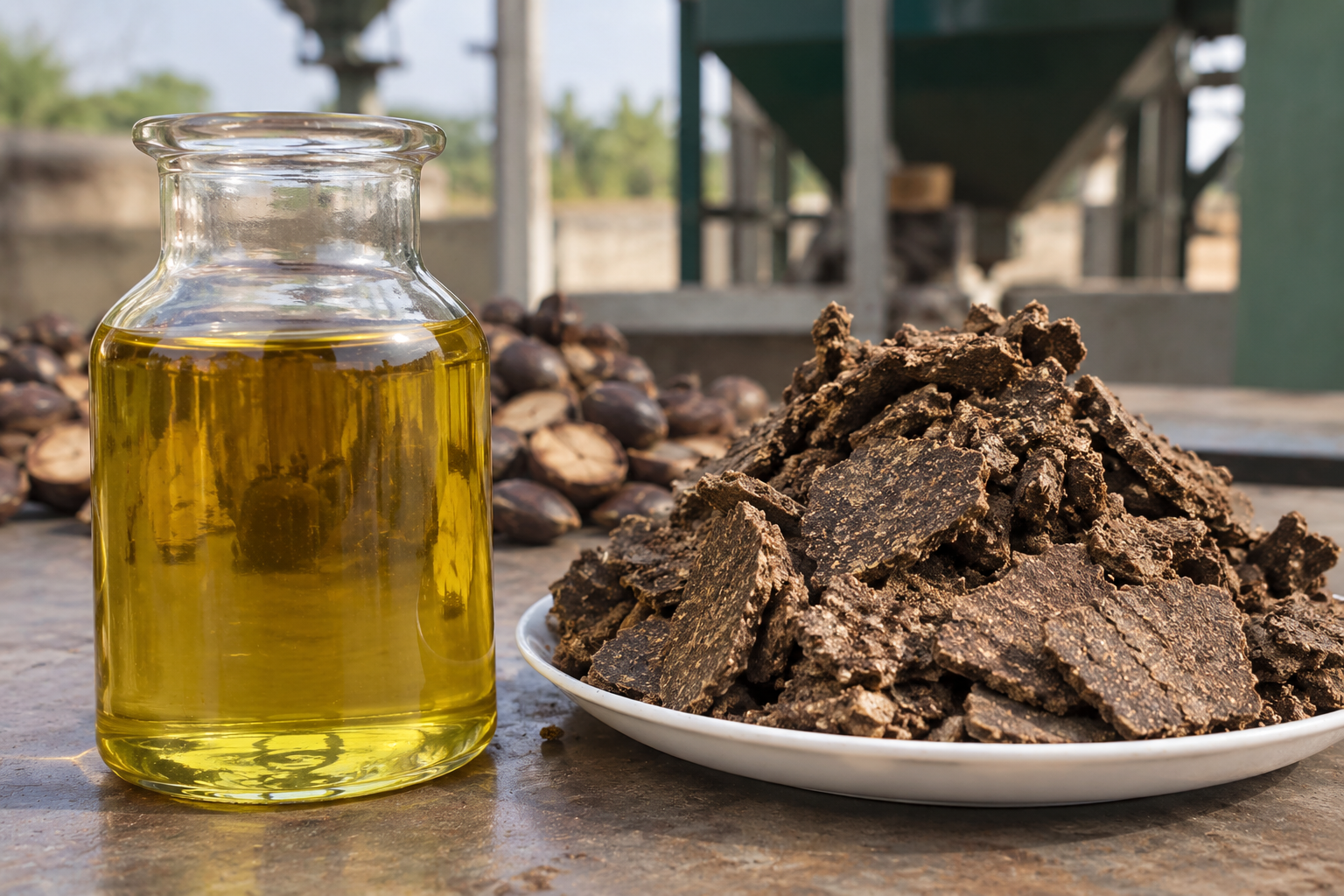
Ranjit Oil Mills India supplies Pongamia SAF Feedstock from our own Maharashtra farmer plantation network, pressed at our Masur mill and exported with the batch-level documentation Australian buyers need to support their own sustainability reporting.
Why choose us
What makes our Pongamia SAF Feedstock supply chain different
We built our Pongamia programme as a feedstock-first operation, not a byproduct trade.
Purpose-Grown Origin
Seed comes from farmer partners cultivating Pongamia specifically as a long-term feedstock tree, not incidental orchard waste.
Marginal-Land Sourcing
Plantations sit on land not suited to food-crop cultivation, supporting a low-ILUC sustainability case.
Single-Origin Traceability
Seed, pressing and export all happen within one operation, simplifying chain-of-custody documentation.
SAF-Focused Quality Control
Oil intended for SAF buyers is checked against the quality parameters HEFA processing requires.
How Pongamia SAF Feedstock is built
From plantation partner to HEFA-ready feedstock
Every batch follows the same documented sequence before export.
Farmer Plantation Sourcing
Seed is sourced from long-term plantation partners across our Maharashtra network.
Mechanical Pressing
Seed is pressed at our own mill, avoiding third-party crushing intermediaries.
Fuel-Grade Filtration
Oil is filtered and checked against parameters relevant to HEFA feedstock quality.
Batch Traceability Records
Each batch is logged from source through to export dispatch.
Export Consolidation
Volumes are consolidated into export-sized shipments for overseas SAF buyers.
Buyer Documentation
Supporting records are shared to help buyers complete their own sustainability assessments.
Diversifying Australia's SAF feedstock base
Why Australian SAF projects benefit from a second feedstock stream
Used cooking oil has become the default HEFA feedstock for many early SAF projects worldwide, which means global demand for UCO is rising quickly and supply in some regions is tightening. Any Australian SAF project relying on a single feedstock category carries real exposure to that competition.
Pongamia SAF Feedstock offers a practical way to diversify. It runs through the same HEFA hydroprocessing pathway as used cooking oil, so it does not require a different refining technology, but it draws on an entirely separate, non-edible supply chain. For SAF developers already sourcing UCO from us, or elsewhere, adding Pongamia oil to the feedstock mix is a straightforward way to reduce single-feedstock risk.
- Compatible with the same HEFA hydroprocessing route as used cooking oil
- Sourced from marginal land with no food-crop displacement
- Farmer plantation network built specifically as a long-term feedstock base
- Available alongside our used cooking oil programme for combined sourcing

Common questions
Pongamia SAF Feedstock — common questions
It is non-edible Pongamia (Karanja) oil supplied as an input feedstock for HEFA-based Sustainable Aviation Fuel production.
It is grown on marginal land unsuited to food crops and does not draw on food-oil supply chains, which supports a lower indirect land-use change profile.
Yes, both feedstocks run through the same HEFA hydroprocessing pathway, so they can be sourced together as part of one diversified feedstock strategy.
We maintain batch-level sourcing records intended to support the sustainability and traceability assessments Australian SAF buyers typically need.
Explore more
Related Australia & feedstock pages
Adding Pongamia to your Australian SAF feedstock mix?
Talk to us about volumes, documentation and how Pongamia oil can sit alongside your existing feedstock sourcing.